
Travel Is One of the Last Spaces Families Still Fully Author Together
- Wake Up
- May 12
- 3 min read

Educational philosopher Zak Stein often speaks about the modern world becoming increasingly organised around speed, performance, stimulation, and efficiency — while human beings still fundamentally develop through relationship, rhythm, challenge, beauty, and lived experience.
At first, the language can sound academic.
But underneath it, I think he is pointing toward something many parents already quietly feel:
Modern life is moving very fast.
And childhood is changing with it.
Most parents today cannot fully control the world their children are growing up inside.
We cannot fully control:– the education system– social media– peer culture– the speed of technology– the level of stimulation surrounding childhood– the pressure teenagers increasingly carry.
Many families are doing their best inside systems they did not consciously design.
And honestly, most parents I know are exhausted.
Working full-time, managing logistics, trying to stay connected as a family while life keeps accelerating around them.
For many families, travel becomes the exhale.
A chance to disconnect. Recover. Finally spend time together.
But through both my own lived experience and the families I speak with, I’ve come to believe travel may also hold another possibility.
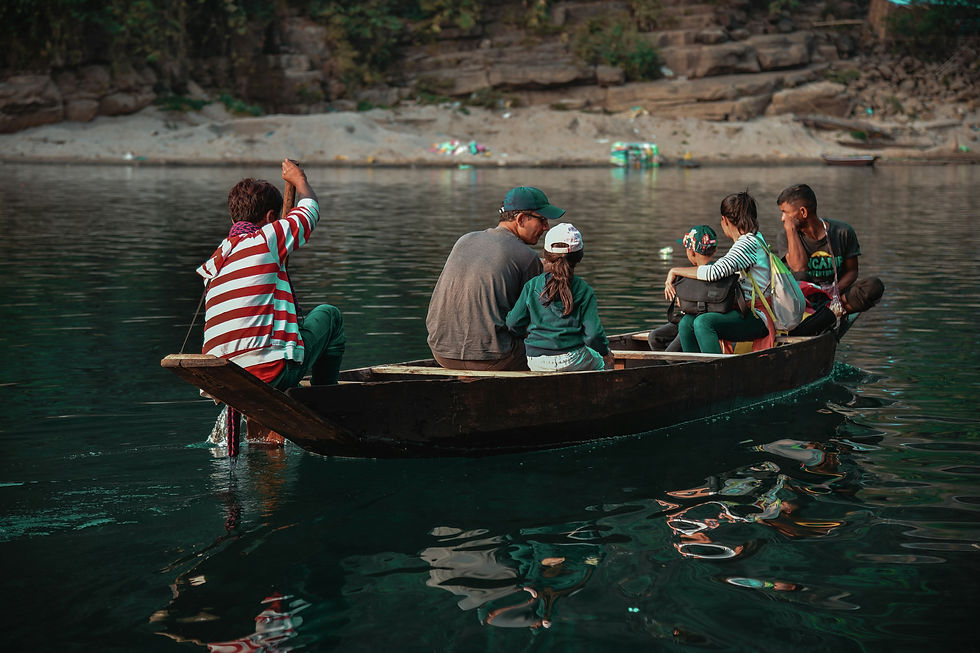
Because travel is one of the few remaining spaces modern families still fully author together.
For a brief period of time, families choose:– the rhythm– the pace– the environment– the level of stimulation– the quality of attention– the emotional tone of the experience– the kind of memories being formed
Travel temporarily reorganises life.
And perhaps that matters more than we realise.
Because children do not develop through information alone.
They develop through environments. Through relationships. Through challenge. Through meaningful experiences that slowly become part of who they are.
And not all experiences shape us equally.
Some overwhelm. Some fragment. Some deepen confidence. Some strengthen identity. Some restore connection. Some remain with us for decades.
This feels especially important during the middle years of childhood and early adolescence.
At 10, 11, 12, 13…
Children are changing rapidly.
Their emotional world deepens. Their friendships become more complex. Their awareness of themselves expands. Their relationship to parents begins to shift. The outer world starts arriving with greater intensity.
And yet modern family life often leaves very little space to consciously meet these transitions.
Everything moves quickly.
School, activities, screens, schedules, work pressures, constant stimulation.
Many families are not lacking love.
They are lacking spaciousness.
This is one of the reasons I have become increasingly interested in the role intentionally designed experiences can play in family life.
Not as escape.
But as developmental spaces.
Spaces where families can reconnect with:– rhythm– nature– challenge– conversation– wonder– presence– and each other
Because even within modern life, there are still moments families can consciously shape.
Travel is one of them.
Not all travel is equal.
Different stages of childhood need different kinds of experiences.
Some stages need:– adventure– challenge– expansion– confidence-building
Others need:– slowness– protection– nervous system recovery– rhythm– reconnection
And perhaps part of modern parenting is learning to recognise the difference.
This is part of what I am exploring through Tejas Journeys.
Not simply planning holidays.
But designing experiences with greater awareness of:– developmental timing– family rhythm– emotional intensity– integration– and what this particular season of life may actually need
Because maybe the real question is no longer simply:
“Where should we travel next?”
But:
“What kind of experiences help a child remain fully human while moving through modern life?”


Comments